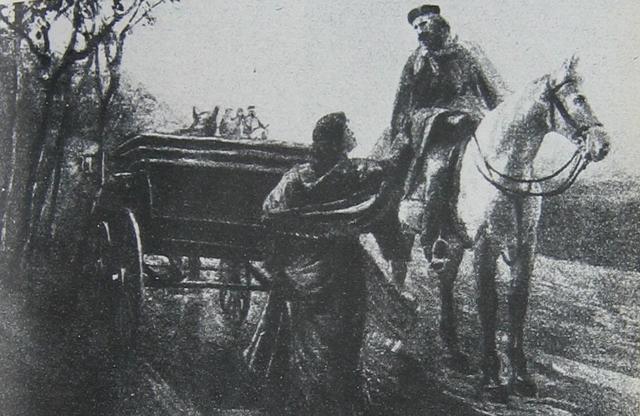
Garibaldi first met his future second wife when she, as a young girl of 18, had crossed enemy lines to ask him to direct his army to Como.
In May 1859, Giuseppe Garibaldi launched what would become known as the Second Italian War of Independence. He had formed the Cacciatori delle Alpi, a small army thanks to a decree issued by the Royal House of Savoy in Piedmont. On May 23rd 1859, he and his army crossed the border into Lombardy which was at the time territory under Imperial Austrian rule. He immediately liberated the town of Sesto Calende at the base of Lake Maggiore but then suffered a setback when attempting to take Laveno. He then turned back towards Varese. As he approached the city, he encountered a girl travelling by cart in the company of a young priest. This meeting was to lead to a doomed romance, a failed marriage and a scandal that divided the aristocratic families of Como over the following two decades until Garibaldi’s second marriage was finally annulled.

The Villa Raimondi in Fino Mornasco
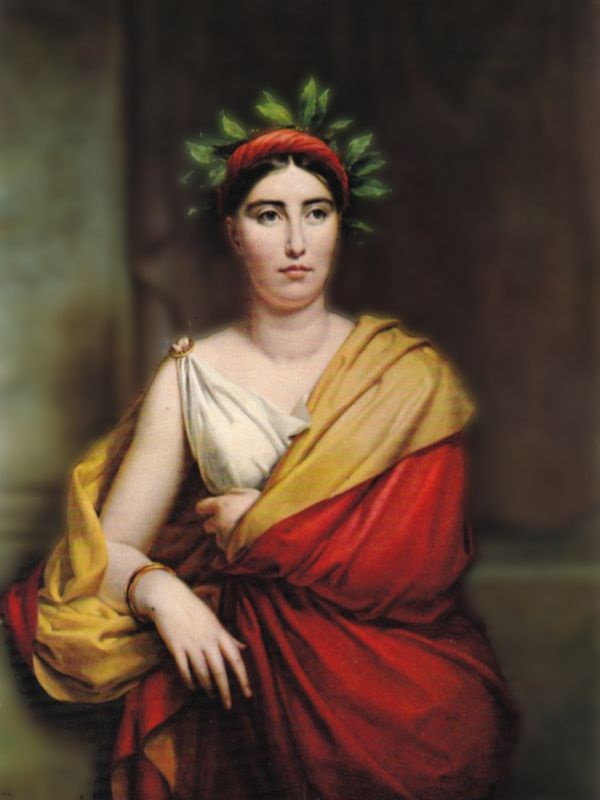
Giuseppina Raimondi was the illegitimate but recognised daughter of the Marquis Giorgio Raimondi, a fervent patriot in the cause of national independence – a cause to which she too was totally committed. So much so that she had volunteered to carry a message to Garibaldi asking him to liberate Como as soon as possible due to the imminent threat of the Austrians sacking the city. At considerable risk to herself and her companion, she had crossed enemy lines to deliver her message safely. Garibaldi was struck by both the spirit and beauty of this courageous and committed young girl in that she strongly reminded him of his first wife, the much loved Anita who had died ten years previously. He penned a reply for Giuseppina to carry back dated Robarello, 26th May 1859 stating:
‘I am facing the enemy in Varese; I think I will attack them this evening. Send the fearful and their families out of the city but retain the virile population, sound our anthems and ring out the bells so that with our two companies we will put up every possible resistance.’
To Giuseppina he said,”Tell them to stand firm and resist until tomorrow. In the meantime, go up into the mountains and to Ca’Merlata. Tomorrow I will be in Como with my Cacciatori delle Alpi.”
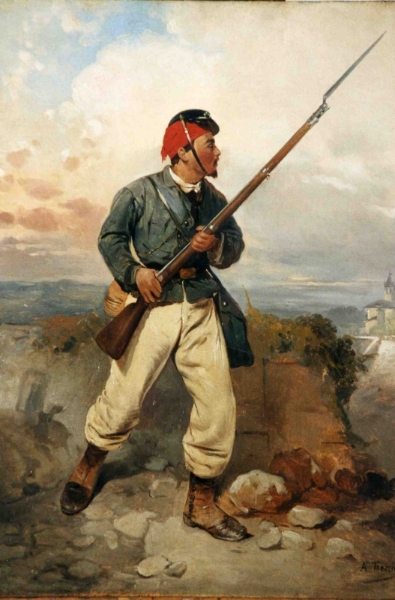
Sergeant in the Cacciatori degli Alpi, attributed to A. Trezzini
The next day the Cacciatori delle Alpi fought their successful battle against the Austrian regiments at San Fermo, on the edge of Como. He and his troops descended the Valfresca to enter the town that evening. He stayed the night at the home of a local aristocrat and officer, Pietro Rovelli, leaving at 3.00 in the morning to continue his march. But he would soon be returning to Como in search of the beautiful young girl he had encountered the day before battle with the single intention of making her his bride.
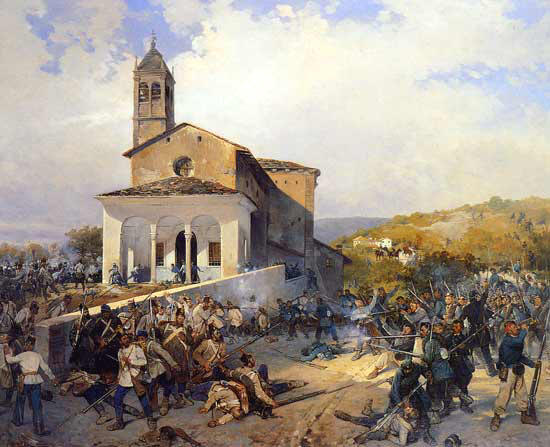
Painting of the battle scene, Battle of San Fermo by Angelo Trezzini who was himself a soldier in Garibaldi’s Cacciatori delle Alpi.
The Marquis Giorgio Raimondi and Giuseppina
The Raimondis were a long established aristocratic family. They were first noted in Como back in the 12th century and subsequently increased their financial and commercial power throughout the 15th century. By the 16th century they had become part of the ruling elite of the city taking their place in the so-called Decurion of city rulers. Giorgio’s ancestor Gian Battista Raimondi had been granted the title of Marquis by the Austrian Empress Maria Teresa back in 1745 – a title granted to the first born of the family in perpetuity. Giorgio Raimondi, Giuseppina’s father, had an Odescalchi as an uncle, and on the death in 1824 of Innocenzo Odescalchi, he inherited Villa Olmo in Como and the Villa Raimondi in Fino Mornasco. The family could thus add these two villas to those they also owned in Birago, Gironico, and Minoprio.

Early photograph of Giuseppina Raimondi and Garibaldi
Giorgio was a fervent patriot who had taken an active part in the local rebellion against the Austrians in 1848 – the so-called ‘5 Giornate’ that led to the surrender of the Austrian garrison. For this he was forced to exile himself and family in Switzerland where in 1849 he bought another villa in Mezzana. Giuseppina had become accustomed to smuggle arms and literature in support of the patriot cause from Mezzana down to Como. It was on one of these missions that she volunteered to carry the message over to Garibaldi.
Giuseppina was born on 17th March 1841, as one of Giorgio’s five illegitimate children. Giuseppe Garibaldi would have been 34 years old at the time. She and her other siblings were all recognised by Giorgio although her mother is recorded as unknown on her birth certificate. Her title of Marchioness was granted or used purely out of respect and not due to rights.
Unrequited Love
Garibaldi retained the image of that courageous young girl who had crossed enemy lines so effectively in order to persuade him to liberate Como from Austrian oppression. He returned to Como in June 1859 determined to woo his new found love. Giuseppina was not or never would be in love with Garibaldi. She was often described as beautiful whilst he may well have been the most heroic contemporary figure in Italy but he was no ‘bell’uomo’ at 52 with his bowed legs, long hair and straggly beard. She rejects his proposal of marriage and sees him leave Como in July on a steam boat for the Valtellina.
Garibaldi recalled this period of unrequited love as follows in an unpublished section of his Memoirs included in Giacomo Emilio Curatulo’s book ‘Garibaldi e Le Donne’ (1913):
I, I have already said, had been struck, as if by a vision, at the first sight of that dear creature, and her image had been engraved in my heart in indelible characters, on the day in which she appeared to me by the woods, leading her cart and accompanied by a priest who was a family friend.
I had not been able to conceal, in the few visits to the pleasant Villa Olmo, the interest that she inspired in me; and in the only favourable moment for a demonstration, met at the Hotel dell’Angelo, in the port of Como on the shore of the lake, where kneeling, I kissed that beautiful hand and exclaimed: “Oh, I want to belong to you in any way!”
Those words seemed not to have achieved their goal, and I almost despaired of having inspired what I felt in my heart.
He described another occasion when invited by the Marquis Raimondi and his daughter to go fishing at night on Lake Como:
‘I flattered myself to be spending a happy night in the company of the woman of my soul; but it seemed to me that this resolution was not to the liking of the beautiful girl. This distressed me; and strong in my pride and dignity as a man, which I never lacked in such circumstances, I decided to forget that angel!
The Dashing Young Officer
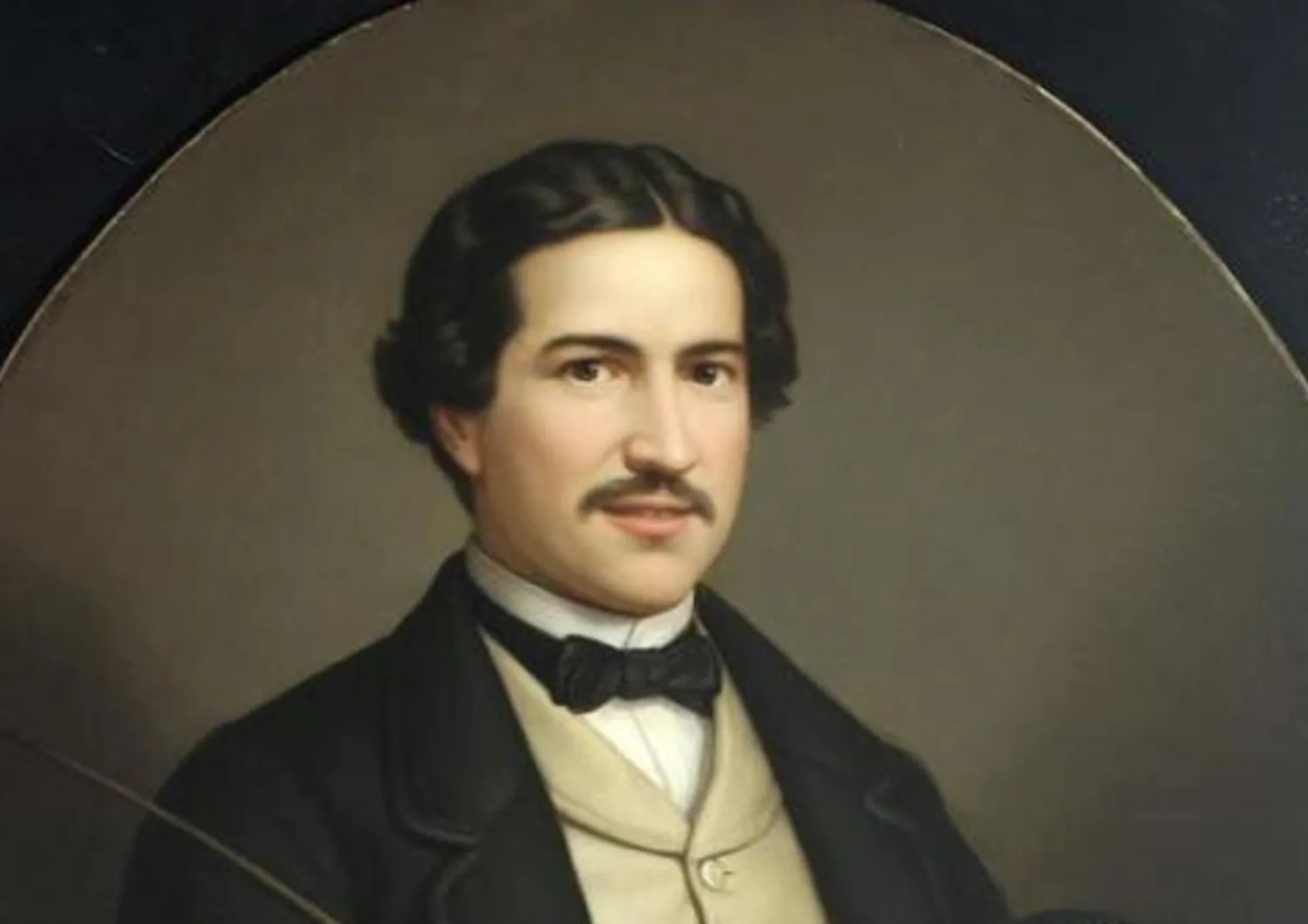
Luigi Caroli, Giuseppina’s actual love
Giuseppina’s affections lay elsewhere far distant from the Hero of Italy. She was in love with a dashing young officer in the regular army, the 25 year old Gigio (Luigi) Caroli. Caroli came from a wealthy family based in Bergamo who had made their money from silk weaving. The two youngsters had first met in Milan and had developed a strong affection for each other.
However the Marquis Giorgio Raimondi was strongly in favour of seeing his daughter marry Italy’s great hero once he was aware of Garibaldi’s obsessive love for Giuseppina. He and the Raimondi family would gain a lot from such a union including a guaranteed seat for himself in the national senate of a soon to be unified Kingdom of Italy. Parental pressure was such that Gigio must have decided there was no future for him together with Giuseppina as a young couple. Whilst still retaining a strong regard for Giuseppina, but confronted with the indomitable will of her father, he broke off their affair.
The Marriage

The chapel in tthe park of the Villa Raimondi in Fino where Giuseppina and Garibaldi were married.
On the break up with Gigio, a devastated Giuseppina lost all will to resist her family pressure. So on November 28th 1859, and in response to numerous proposals of marriage from Garibaldi, she wrote to him acquiescing to his wishes.
On receiving this news, Garibaldi set off immediately for Villa Raimondi in Fino to verify that all was as he had hoped and sent the following somewhat contradictory letter in reply:
30 November 1859
Adorable Giuseppina, I am torn by two feelings that trouble me in an inconceivable way: love and duty! I love you with all my soul, I would give what remains of this tormented life to be yours for just one moment! My duty forbids me to be yours!.. To make you, whom I idolize, mine.
I have a plebeian woman on the island and from that woman I have a little girl. This would be the least obstacle because I can’t love her anymore and would not tell her I do!
By joining you, beautiful girl, I would go back on that characteristic of sacrifice to which I can attribute a good part of my popularity and which I appreciate. And which I may still need in order to fight for the Fatherland, when Italian affairs still call me to lead soldiers into battle where it might be said of Garibaldi: he has sold himself to fortune … And divorced himself from the people to whom he had so often boasted of wanting to serve until death.
That I am poor – your angelic and generous heart has already forgiven me. But the fact that I am of an older age to yours, and in not too good health – is a strong obstacle, and one which I must not allow your indulgent sympathy to observe. Soon perhaps I will no longer be a fit companion of florid beauty – I will be reduced to burdening you “living a desperate life! Or killing myself! Because I certainly couldn’t cope with your repulsion!” Reply to me immediately! I am in a state that cannot be waited on …Do not be angry, for God’s sake, with who loves you so much! But allow me to distance myself from you with your esteem, your friendship and the consciousness of having done my duty. Yours for life and whatever happens! G. Garibaldi
Needless to say, Marquis Giorgio Raimondi did not allow these scruples to interfere with the plans, although Garibaldi had identified at least one source of potential hostility to the marriage. Some Garibaldi supporters feared that his marriage to such a young bride would deflect him from his planned invasion of Sicily to complete the unification of the entire country. But Giuseppina was a committed patriot and would have been in full support.
Yet there was another person, very close to home, who was not at all happy about the marriage. This was Pietro Rovelli from another of Como’s long established aristocratic families who had provided Garibaldi with overnight accommodation following the victory at San Fermo six months previously. For now he keeps his opposition hidden as the plans for the marriage proceed.
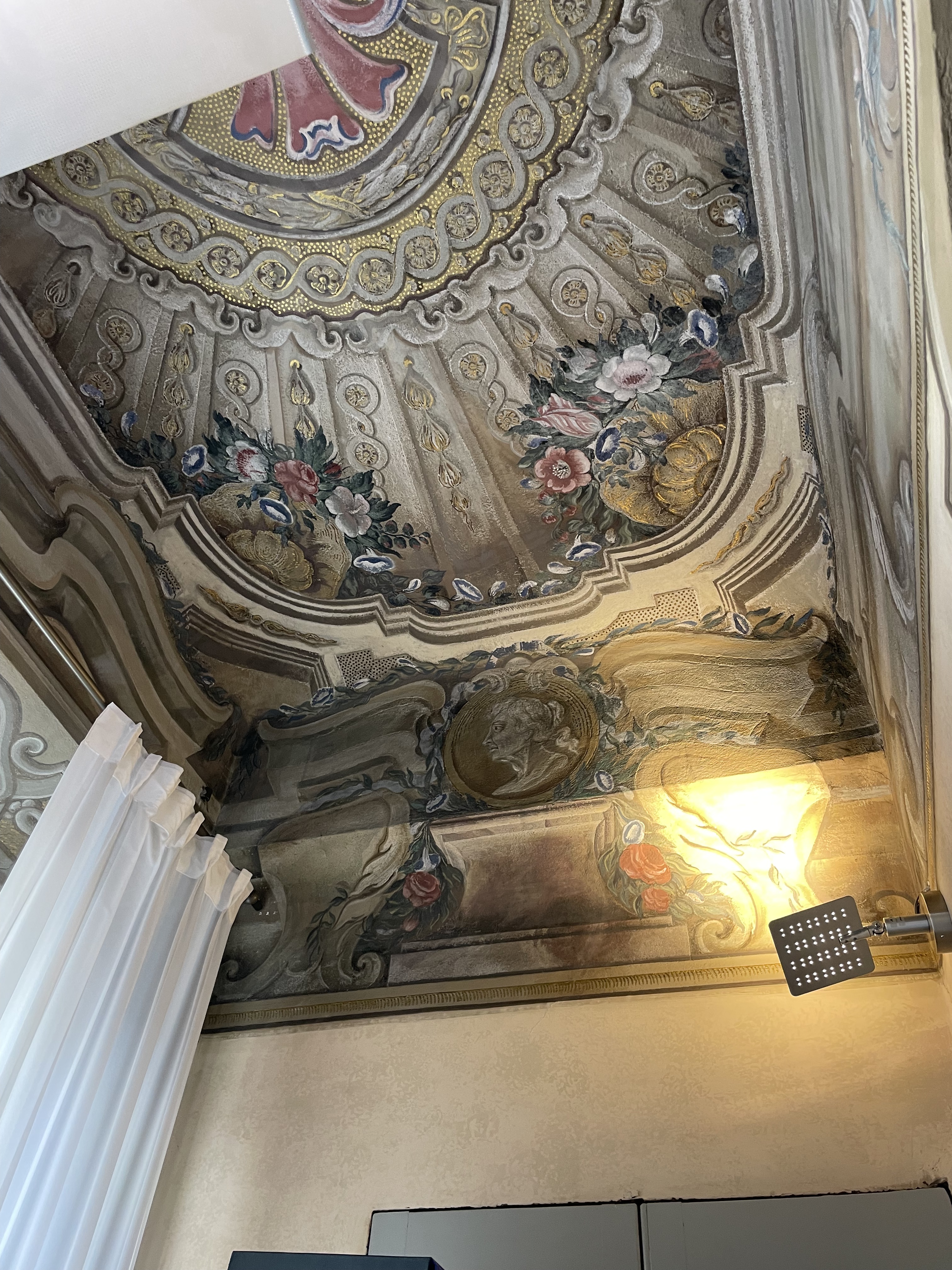
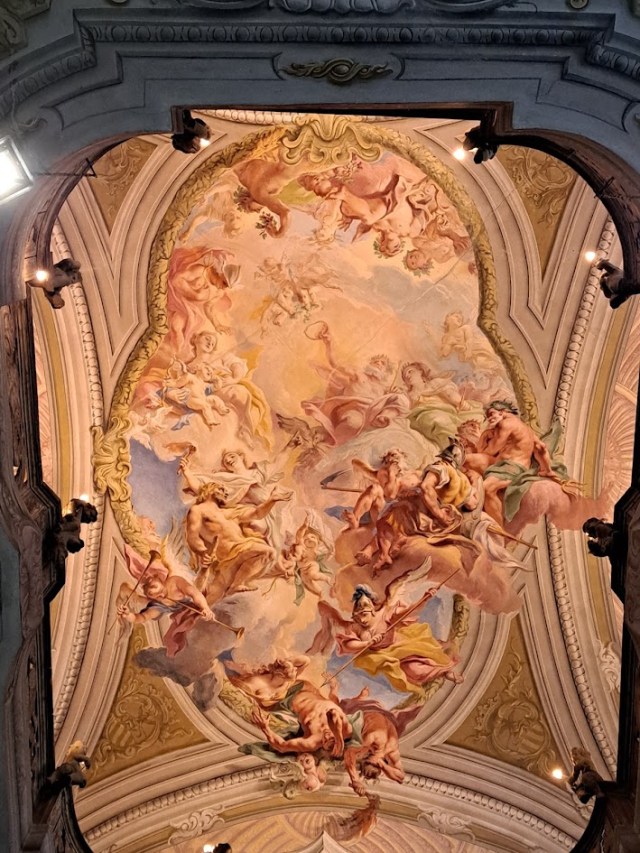
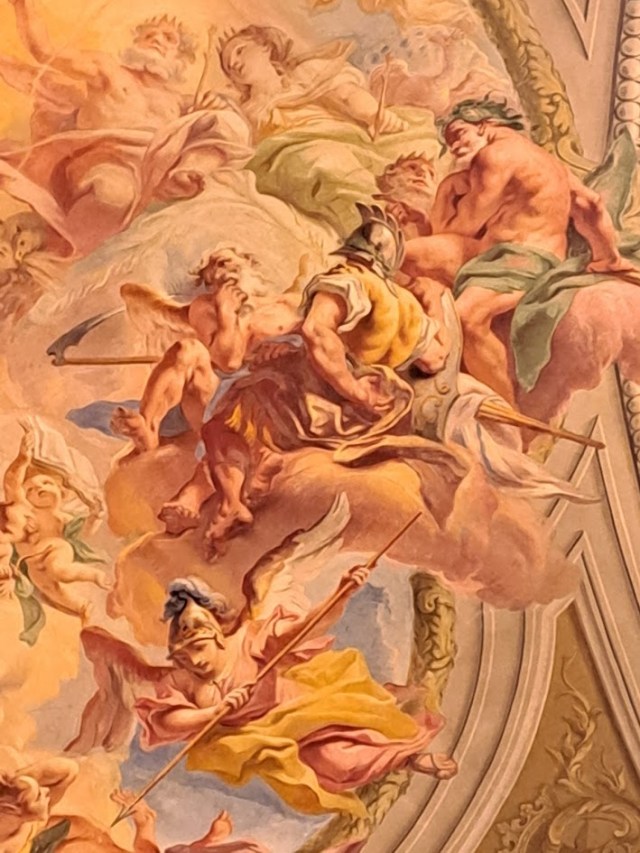
The decorated ceiling of the bedroom in the Palazzo Olginati Rovelli at No. 56, Piazza Volta where Garibaldi spent the night on May 27th 1859 after the successful Battle of San Fermo
In the meantime Marquis Giorgio Raimondi is totally delighted by having Garibaldi as his house guest in the Villa Raimondi from the start of December. But the General has a riding accident when out with Giuseppina on the 8th and is confined to bed with a serious injury to his knee. Pietro Rovelli, in his role as Captain of the Como National Guard, pays him a courtesy call on the 18th to pay homage to Italy’s greatest hero. He does not express any of his misgivings about the marriage at the time.
On 1st January 1860, Garibaldi is recalled back briefly to the Royal House of Savoy in Turin and it is now Giuseppina’s turn to be confined to bed suffering from typhoid. Finally, with Giuseppina on the road to recovery, the marriage date is fixed for the 24th for it to take place in the chapel within the grounds of the villa in Fino. Invitations are sent out to over 200 guests but few are able to fit in the chapel itself to witness the ceremony. And so few get to witness the drama that unfurls at the end of the service as the newlyweds step out of the chapel.
The Separation
As Garibaldi steps out from the chapel with his bride, one of his soldiers rides up to deliver a note to him in person. The note, written anonymously, denounces Giuseppina for infidelity and betrayal of Garibaldi due to an ongoing carnal affair with Luigi Caroli. Garibaldi’s reaction was immediate and turning to his young bride he shouted, “Signora, you are a whore!”. She in turn replied,”I thought I had given myself to a hero, but you act just like a common soldier.” Thus their relationship ended. Giuseppina left to stay in the Raimondi family’s villa in Como, the Villa Olmo, whilst Garibaldi returned to the Villa Raimondi before later leaving for Milan and Turin. The two would never see each other again.
The marriage would be deemed ‘ratified but not consummated’ and Garibaldi would seek its immediate annulment but he only finally managed to achieve this twenty years later.
No doubt Giuseppina would have preferred to have been at the altar with her young dashing officer but he had renounced her as a result of the pressure and ambitions of the Raimondi clan. She in her desperation had conceded to her father’s wishes, and although not in love with Garibaldi, was resigned to the future marked out for her by these two elder men. But who had written the damaging note and why? Suspicion then and later fell on Pietro Rovelli, who, as cousin to Giuseppina, had been invited by her to attend the ill-fated ceremony.
Pietro Rovelli
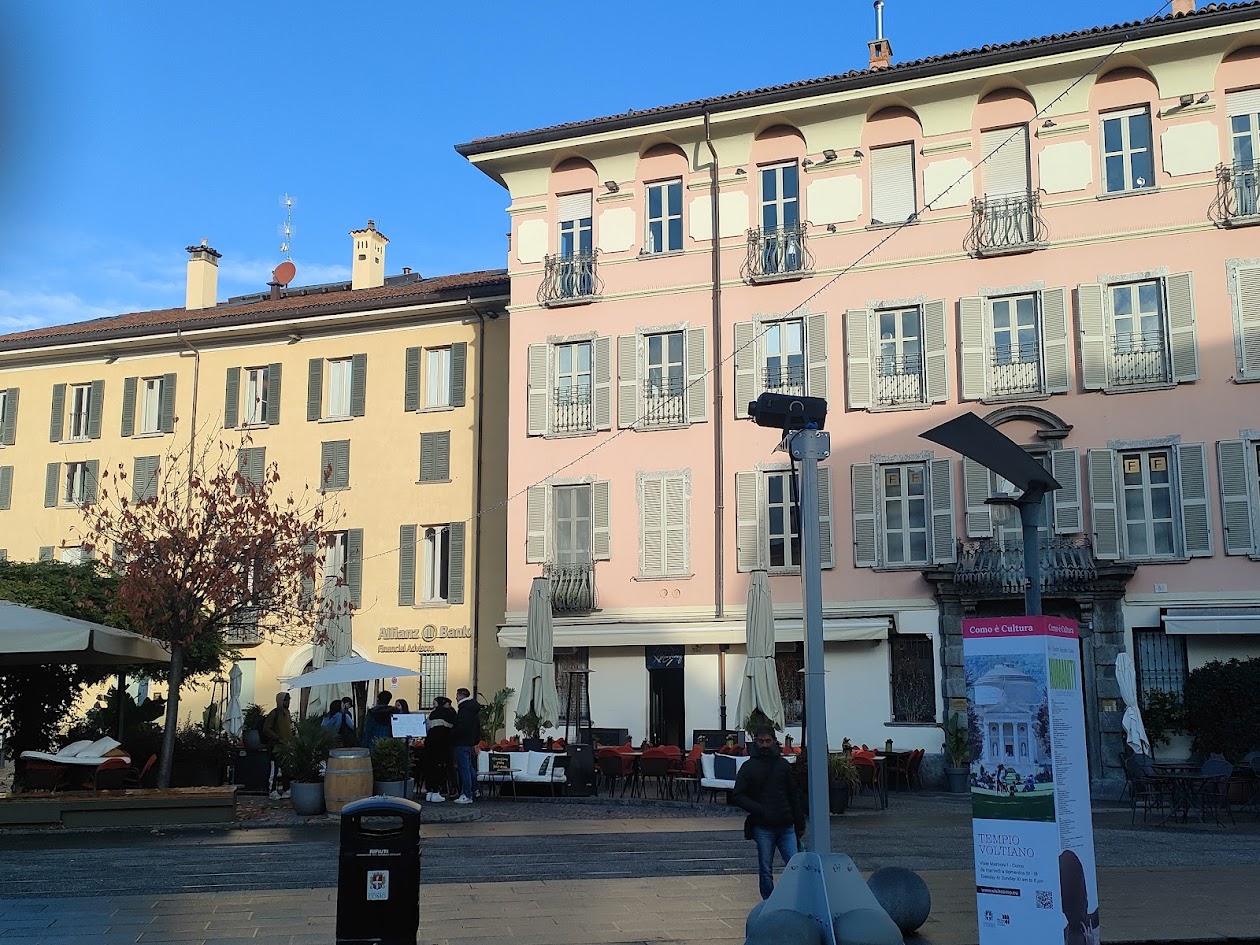
Palazzo Vietti Rovelli at No. 54 Piazza Volta on the left and Palazzo Olginati Rovelli at No. 56 on the right. Both buildings were owned by the Olginati family during the 17th century.
Pietro Rovelli was, similar to the Raimondis, a member of a long established aristocratic family with a recorded presence in Como from the 1400s. He too bore the title of Marquis which had been conferred to the family by the Austrian Emperor Charles VI, father of the more famous Maria Teresa. He too was a patriot albeit with a less visible role during the ‘Cinque Giornate’ rebellion in 1848 but did have a distinguished military career fighting alongside Garibaldi. He was born in July 1817 and thus 42 years old at the time of his cousin Giuseppina’s wedding.
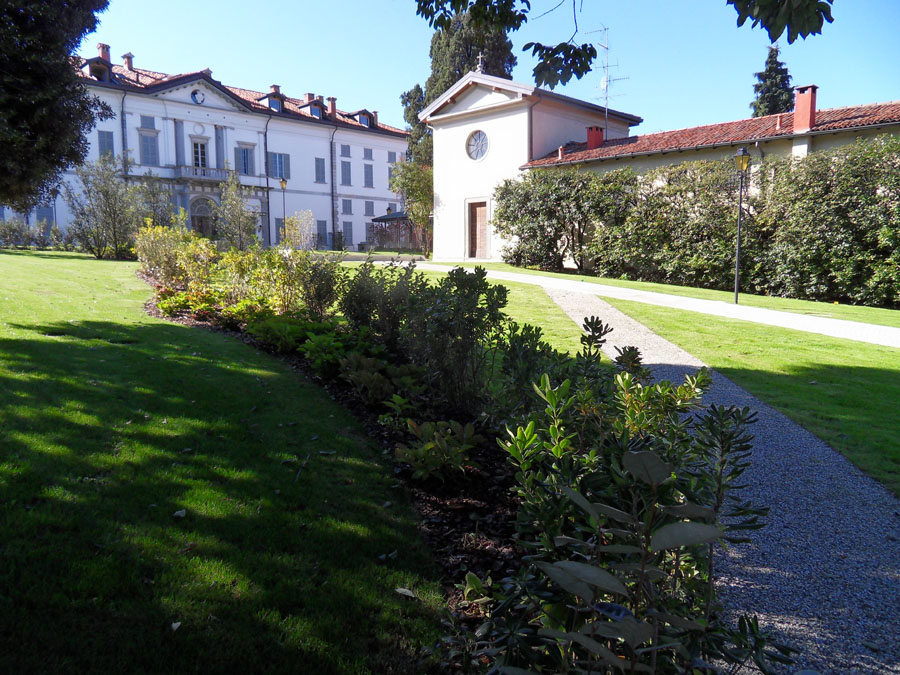
Chapel and gardens in Fino Mornasco
His relationship with the Raimondis was not strong in spite of family connections. His early military career had been lacklustre whilst serving in the Austrian army. He only managed to reach the rank of corporal after a full eight years of service which ended in 1844. He was also considerably less wealthy than the Raimondis. He had been responsible for administering some of the Raimondi family affairs but had been sacked for ineffectiveness. He saw developing a strong relationship with Garibaldi as the way to further his fortunes.
Rovelli never admitted to authoring the letter that provoked the immediate collapse of Garibaldi’s second marriage. But in all his later accounts of the period, he managed to scandalise the reputation of Giuseppina and provoked a vendetta dividing the Raimondi and Rovelli families.
He started off by suggesting that the atmosphere at the actual wedding was as at a funeral with no sense of celebration. He reports that immediately after the service, but before Garibaldi had read the anonymous note, Giuseppina had taken off her wedding ring to swap it with one given her by Caroli.

The ‘Torre dell’amore’ on the periphery of the Villa Raimondi in Fino where it is alleged Giuseppina met with Gigio Caroli on the night before her marriage to Garibaldi.
He then went on to state how he had spent the entire night prior to the wedding patrolling the grounds of the Villa Raimondi to prevent Gigio Caroli from visiting Giuseppina. He claimed that he had failed and that the young lovers had met in the park in the so-called ‘Torre dell’amore’. To give fuel to Rovelli’s accusations was the fact that Giuseppina had admitted at the beginning of January that she was pregnant. But she never stated by whom.
Rovelli himself sought to justify himself in accounts to Garibaldi and other members of his entourage. The following is one of his accounts of his actions the day after the wedding.
I immediately left that house with a broken heart. The next day, in Como, I was called on by Colonel Deidery, who told me and confided in me that he had followed like a bloodhound the trip to Como of Donna Giuseppina who had used as a pretext for her trip that she had some shopping to do, while, from letters intercepted at Camerlata, he knew it was for a meeting with Caroli at Olmo (Palazzo Raimondi) in Como; having been able to ascertain that Donna Giuseppina went alone to the Santa Teresa Barracks with Mr. Mancini, another of her lovers, and that she left after some time accompanied by the same, who, bidding him farewell, left to go to Olmo in the company of Caroli.
The following day, there was a message from a Raimondi servant, who was to take me immediately to Olmo, where Donna Giuseppina needed to speak to me.
When I went there, I found her with her mother, and as soon as I was close to her, she insulted me with the most basic insults, and it seemed like the fury of Inferno, who wanted to tear me to pieces, telling me that the General had abandoned her because of my denunciations, and that I would pay the price for such infamy.
I didn’t let myself be surprised, although I was shocked by what I heard, adding that if Deidery had said I was the author of her misfortune, whether true or not, it would have been justified.
I immediately took the railway to Milan and found myself in Cucciago with the General, who had come from Fino, and in Milan I apologized to him for not having warned him of the bad situation in which he had fallen, and he obliged me, on my honour, to testify what was within my knowledge, on the questions that were asked of me.
Shortly afterwards, everywhere there was much talk and numerous assertions of Giuseppina’s already advanced pregnancy, attributed to Caroli (with whom shortly afterwards Giuseppina left for Switzerland, it being disclosed that a few months later she had been relieved of a child).
I kept silent about every fact relating to these scandalous events, because I was made to promise so by Garibaldi ‘
The above is an extract from Rovelli’s memoirs passed on by him to Garibaldi towards the end of 1860 and published in 1909 by his great grandson in a collection entitled ‘Luci ed ombre sul drammo di Fino’.
The Aftermath

Giorgio Raimondi inherited Villa Olmo in Como on the death of Innocenzo Odescalchi in 1824. It was just one of the numerous villas owned by the Raimondi family at the height of their fortunes.
As Rovelli reported in the extract above, Giuseppina left the family home in Fino to take up residence for a few days in Villa Olmo where she was joined by Gigio Caroli. The general population was scandalised by the treatment of Italy’s greatest hero and shunned both Giuseppina and the rest of her family.
The world around the Marquis Giorgio Raimondi collapsed as he and his family were socially marginalised. Giuseppina’s sister complained how she could no longer attend any of the society balls down in Milan. The Marquis had to denounce any possibility of being elected to the Royal Senate when war ended in 1861 in spite of his years of active dedication and financial contributions to the patriotic cause. He lived on isolated from Como’s other aristocratic families until he died in 1882, in the same year as the death of Garibaldi.

The gardens of the Villa Raimondi in Gironico. Giuseppina came to live here on her return to Como
Giuseppina and Gigio left Villa Olmo together shortly after the scandal broke heading for Paris via Lugano and Zurich. However their relationship did not last and they separated in June or July of the same year. Giuseppina returned to Como but was ordered by Giorgio to live away from Fino in another of the family villas in Gironico.

Giuseppe Garibaldi and Francesca Armosino, his third wife.
Garibaldi had sought an annulment of his marriage to Giuseppina from the day following the ceremony under the legal definition of a marriage ‘rato e non consumato’ (ratified and not consumed). However it took him twenty years to achieve the annulment. He had become increasingly anxious to get the divorce so as to marry Francesca Armosino and thus legitimise their two surviving children, Clelia born in 1867 and Manlio born in 1873. He turned to the press in his campaign to achieve the annulment asking them to publish scurulous accusations against Giuseppina of incest and other excesses, as follows:
“Illustrious director of the Secolo di Milano, please publish: Mrs. Giuseppina Raimondi, transgressing against me in order to cover up her defamatory behavior in the eyes of public opinion, is today with a manifesto of innocence, she must remember that she wrote to me to go and free her while I was embarking from Genoa for Caprera. It was probably to remove her from the incestuous state with her father of the various lovers and her state of pregnancy over time in which she impudently deceived me. I have sufficient proof of her crimes and I will produce them when the time comes.”
The newspapers refused to publish this recognising that they would immediately face court action brought by Giorgio Raimondi for defamation of character.

The Villa Raimondi in Minoprio where Giuseppina married Lodovico Mancini
The annulment was in any case granted in 1879 allowing Garibaldi to marry his Francesca and for Giuseppina to marry Lodovico Mancini. It was perhaps only fitting that Giuseppina, who had always been a consistent and dedicated patriot, should marry another patriot with a distinguished military record fighting alongside Garibaldi whom he considered a close friend. They were married on 21st June 1879 in a civil ceremony at another of the Raimondi villas in Minoprio. He went on to live until October 1912 with Giuseppina dying six years later at the age of 77 at yet another of the Raimondi villas in Birago.
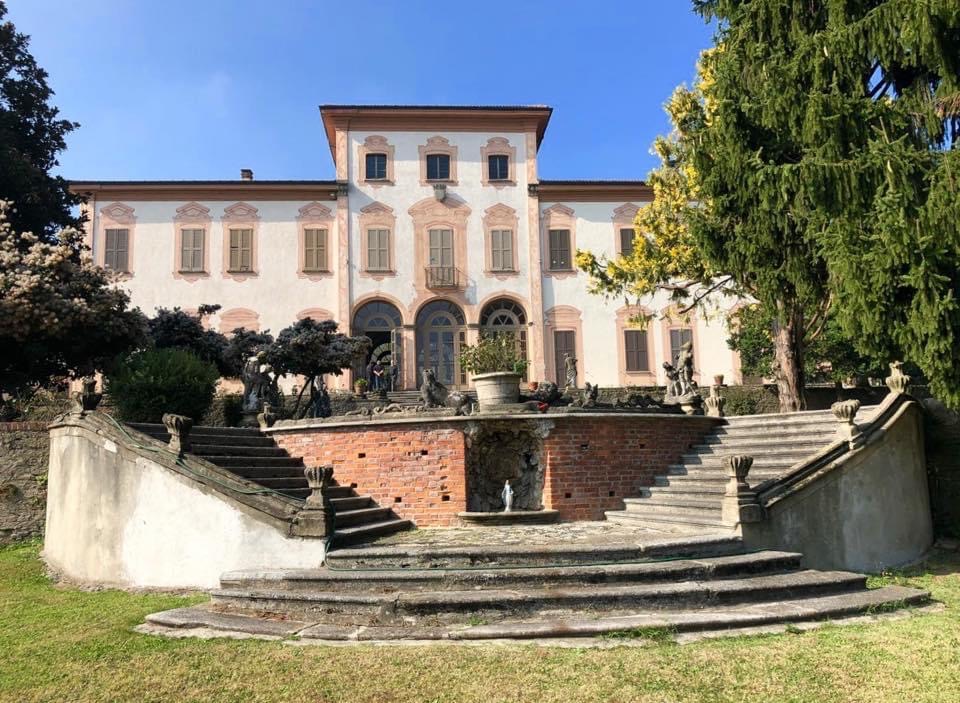
The Villa Raimondi in Birago where Giuseppina went to live her last years.
As for the other players in our lakeside scandal, Gigio Caroli, his brother Bernardo and a close friend Carlo Ceresa were all denied permission to join Garibaldi on his mission to conquer Sicily later in 1860, Instead Gigio joined a force of Garibaldini that went out to support the Polish War for Independence from Russia. He was taken prisoner during a battle near Cracow in May 1863 and then sent as prisoner to Siberia where he died two years later.
Conclusion
The scandal that broke over the Raimondi family arose from Giuseppina bowing to the pressure from her father to accept the proposal from Italy’s almost sanctified hero of the Risorgimento. The malicious intervention of Pietro Rovelli caused that marriage to fail. Was that failure in the long run for the best? At least Giuseppina and Garibaldi independently were later to find future happiness.
Perhaps the principal victim was the Marquis Giorgio Raimondi, the patriarch who had pressured his daughter into accepting the marriage proposal out of personal pride and ambition.
Maybe some would suggest that both Giuseppina and Caroli should have stood their ground and resisted Raimondi pressure. But once one of them, Gigio, caved in, Giuseppina’s own resistance was mortally weakened, and the seeds of the ensuing tragedy duly sown. I leave the last words on this to Giacomo Curatulo from his book ‘Garibaldi e le donne.‘
“What storm must not have stirred in the heart of the young patriot who, remaining faithful to her Caroli, resisting all the vanity and flattery of the offer of love from a man like Garibaldi; then suddenly abandoned by the man of her heart, in the throes of despair due to the disillusionment she suffered, pressed by paternal authority and under the dominion of one of those psychological states which, without resorting to repugnant accusations, explain many things, she decides on her fate and writes to the man she doesn’t love, but by whom she knows she is loved, to make her his?”

The plaque honouring the life of Giuseppina Raimondi at Birago.
Acknowledgments
Information for this article has come principally from Garibaldi, verità nascoste alla storia by Arduino Francescucci, Vincenzo Amore.
Further Reading
There is another article in Como Companion describing the Battle of San Fermo in greater detail to be found at San Fermo to Como – in the footsteps of Garibaldi
The frescoes and the interior of both the Palazzo Vietti Rovelli and Palazzo Olginati Rovelli, both in Piazza Volta, are described in Como’s Hidden Gems – Palazzo Rusca, Palazzo Olginati Rovelli and Palazzo Vietti Rovelli
Como was one of three Lombardy cities that rose in rebellion against Austrian rule in 1848 – the European Year of Revolutions (including the Chartists in Great Britain). The ‘Cinque Giornate’ are described in Como – Its Role in the Birth of a Nation




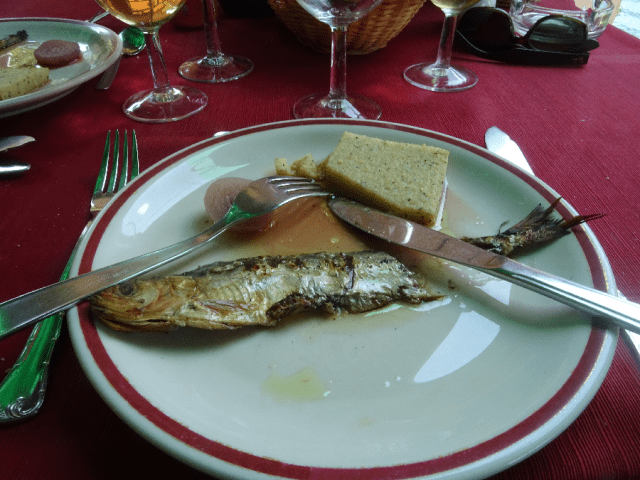



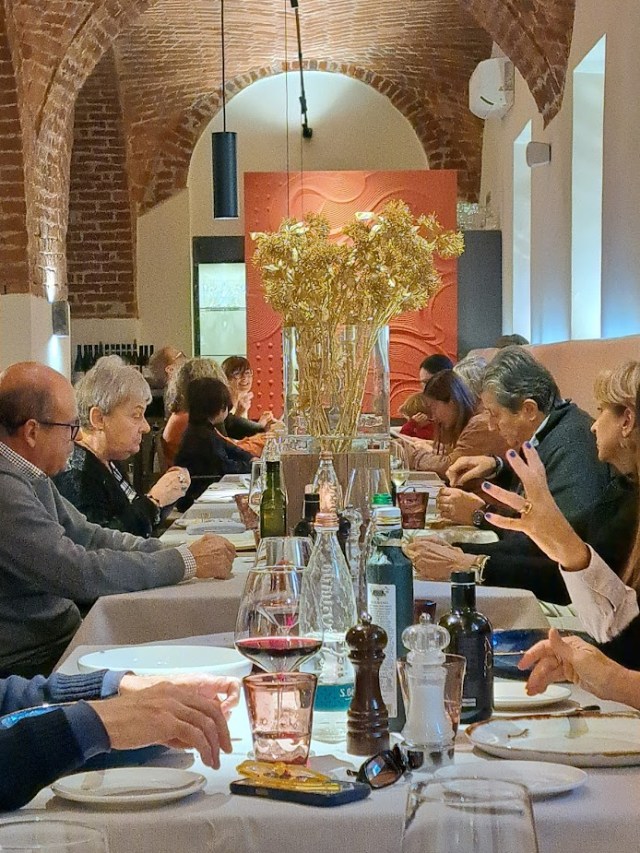
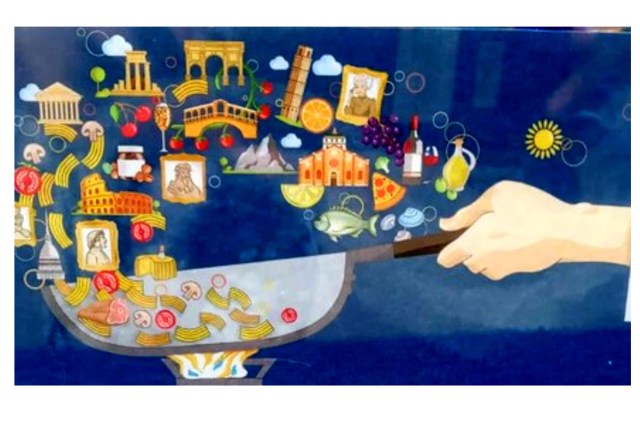
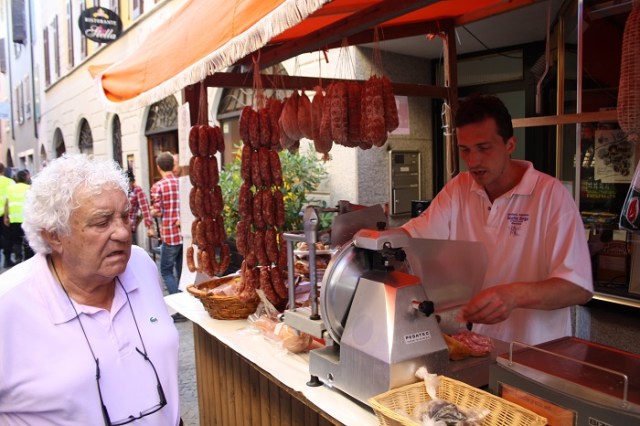



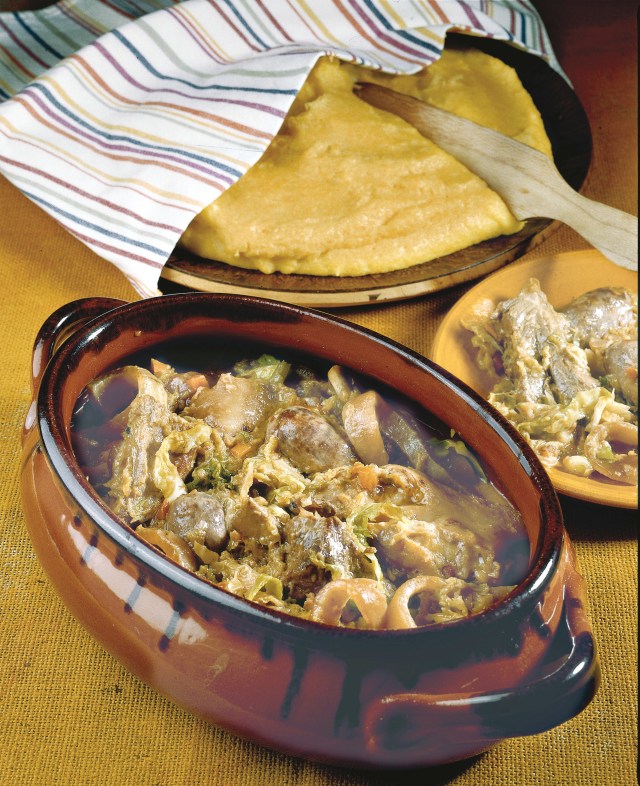
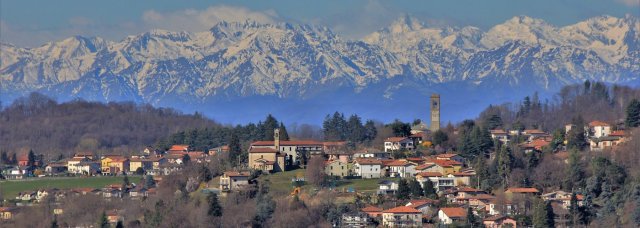
 Italian cuisine is not the cuisine of a single country but of the various regions. One has to go way back in history to understand why and where Italy’s regional borders were set and what geo-political aspects caused each region to develop its own character. But a significant aspect of this regional individuality is the local cuisine. The thin slices of veal in a tuna sauce known as vitello tonnato is served one way in Lombardy and entirely differently in neighbouring Piedmont. The ‘cucina povera’ dish of tripe is prepared in various ways depending in which region you are ordering it. The way these dishes are prepared has been determined by tradition, by knowledge passed down through generations. Within those traditions, there is always space for individual variations established within a particular restaurant or family and again passed down through time.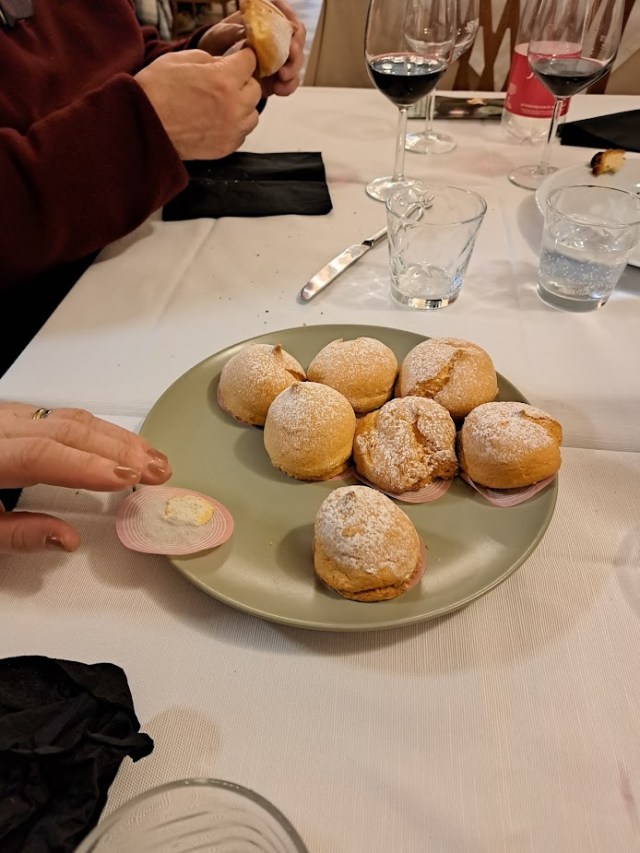
 The UNESCO award is a recognition of the ingrained importance of conviviality and hospitality, the respect paid to seasonal variations and for those culinary traditions maintained within differing towns and regions. The key to authenticity lies in how, when and what is eaten.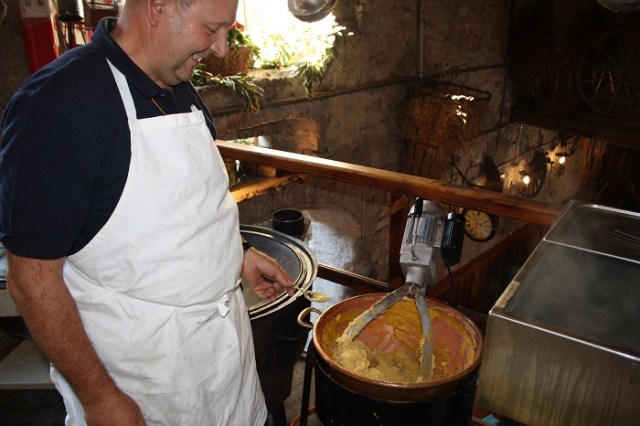
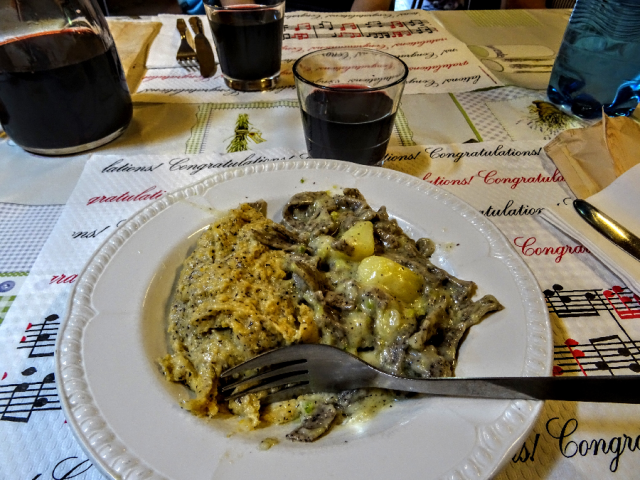
 Slow Food is a movement originating in Turin that now operates on an international scale. It is committed to promoting authentic cuisine as stated in its manifesto of 1987. They state it works to ‘
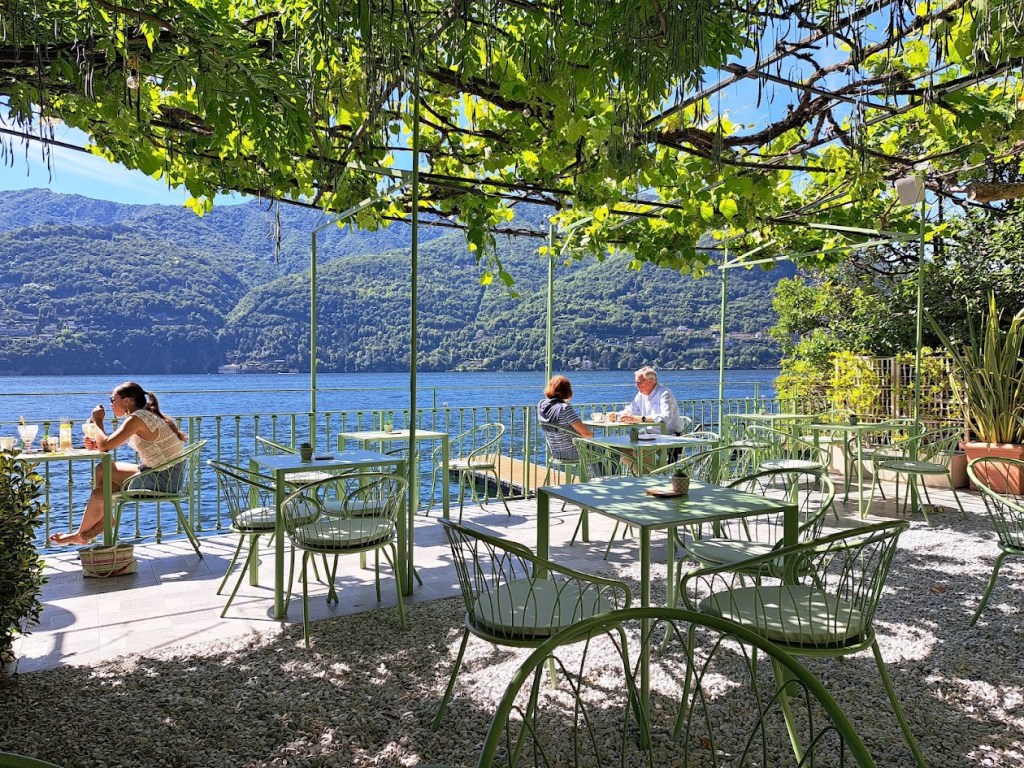
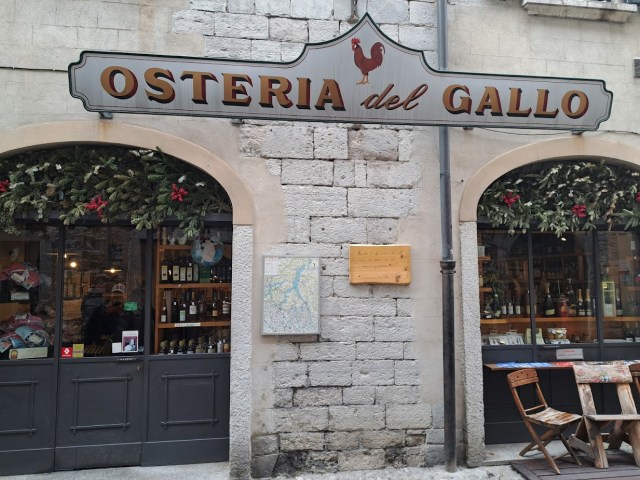 Also within Como I would include the wine bar Pronobis on Via Lambertenghi not just for their commitment to quality and tradition but also for their impeccable hospitality. The restaurant ‘Tira, Mola e Meseda’ on the southern outskirts of the city delivers genuine Lombardy cuisine to a high quality.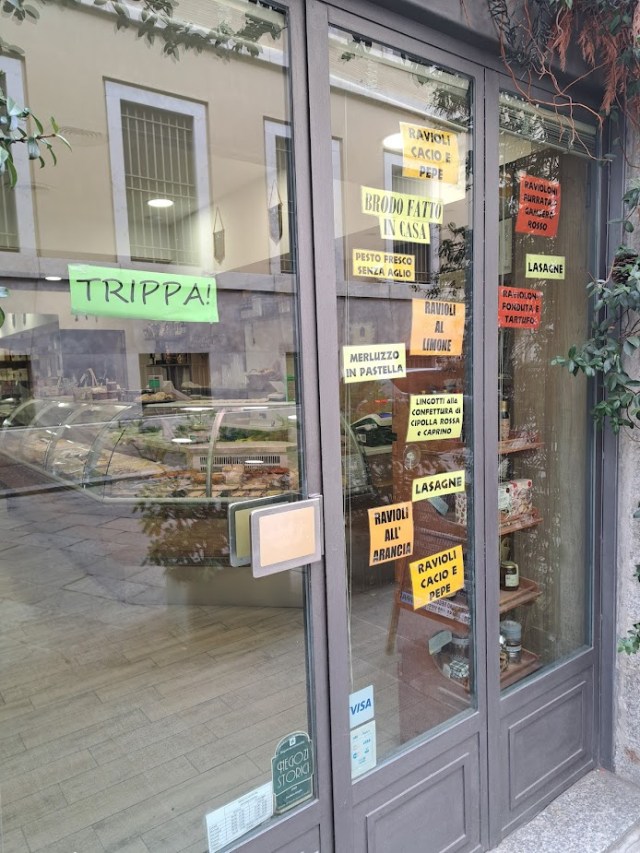











 Conclusion
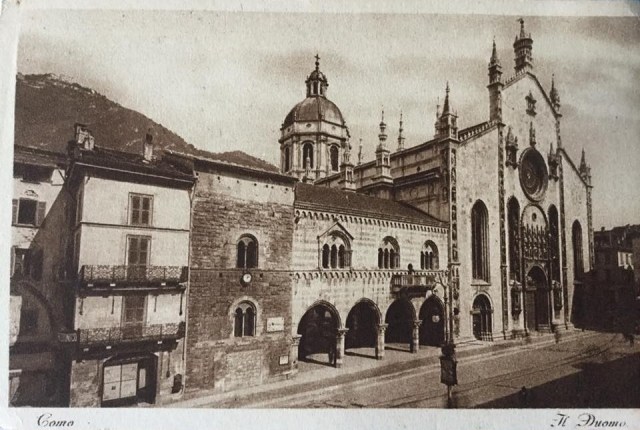
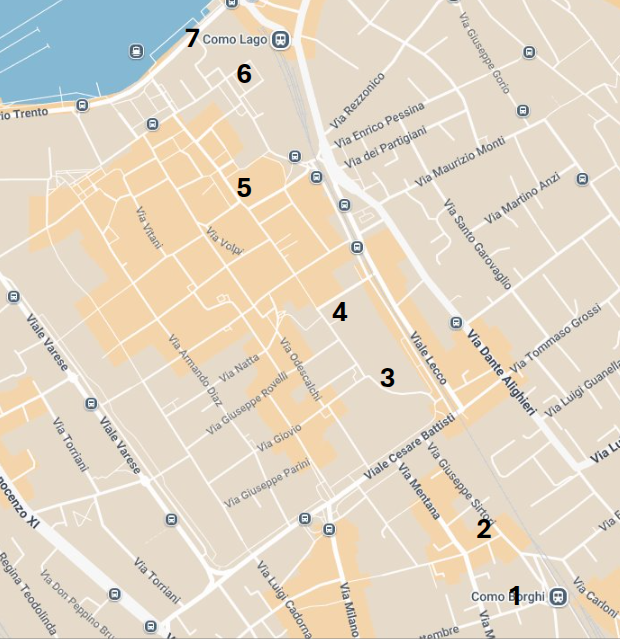
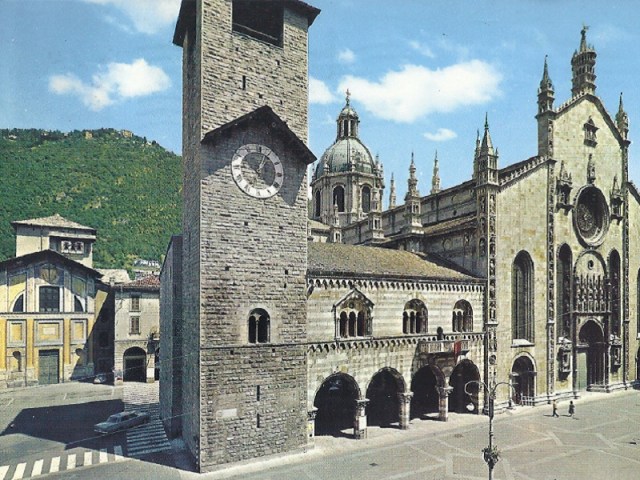 The way we see Piazza Duomo and the attached Piazza Grimoldi today is mostly thanks to Federico Frigerio. The illustration below marks each of his changes and interventions.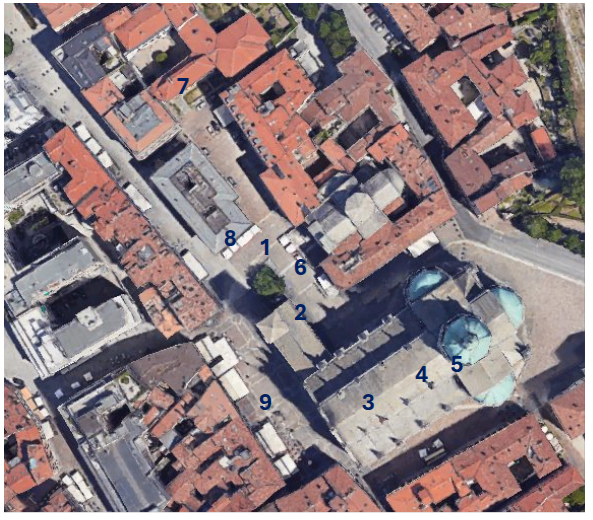
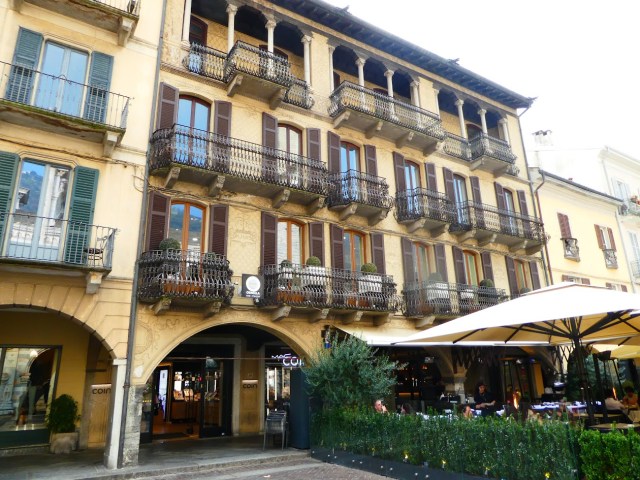
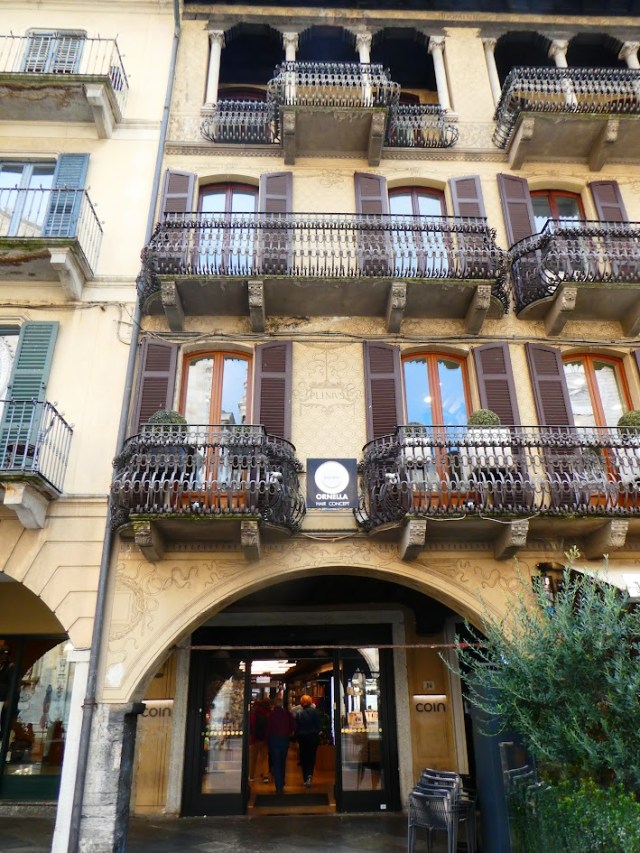


 Other crests exist above doorways on both sides of Via Balestra and above the entrance to Palazzo Odescalchi on Via Rodari but are so worn with age that it is impossible to make out their designs. These all date from the Renaissance period and adorn doorways decorated in contrasting bands of Varenna and Musso marble, as was quite commonly used on many of Como’s Renaissance palazzi. The more recent crest above the doorway of the bar at the theatre end of Via Porta shows an anchor and the staff of Mercury – a caduceus- leading to the idea that the householder was a merchant involved in shipping on the lake.
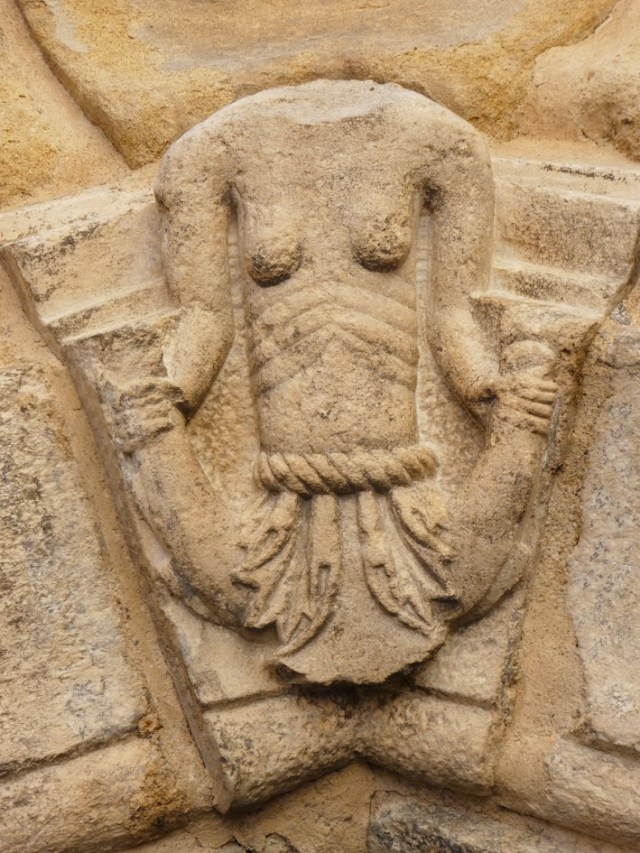


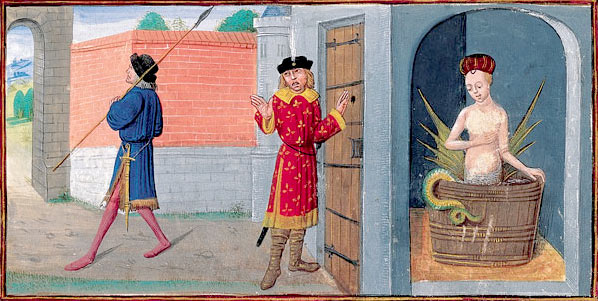 All of this mostly good fortune came to an end the moment Raymond could not resist seeing what Melusine did every Saturday. Spying on her through a keyhole, he saw her lower body transformed into a serpent. Later he could not help berate her by calling her ‘Serpent’. At this point Melusine developed wings and flew away.
 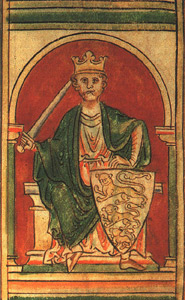 Another interesting fable mixing mythology with early historical accounts and also including mentions of the Crusades was the 14th century account of Richard Coer de Lyon, a magical telling of the life of this Plantagenet King of Western France and England. In this version, King Richard’s father, Henry II, does not marry Eleanor of Acquitaine but someone called Cassodorien, the daughter of the King of Antioch. They have three children, namely Richard (the later King), John (responsible for Magna Carta) and a daughter named Topyas. History records Richard’s exploits and also those of bad King John but Topyas is never mentioned because she was whisked away by her mother who sprouted wings and took to flight when she was forced one day to sit through an entire Mass.